
Capturing Authentic Moments While Traveling
There is a particular kind of magic that happens when you are somewhere new and everything feels vivid and alive. The colors seem brighter, the sounds more interesting, and even ordinary scenes carry a sense of wonder. Travel has a way of opening our eyes to the world in a way that everyday life rarely does, and for many people, photography has become the natural companion to that experience. But there is a real difference between snapping quick shots for social media and actually capturing the authentic soul of a place. The former is easy. The latter takes intention, patience, and a willingness to slow down enough to truly see what is in front of you.
Put the Camera Down First
It sounds counterintuitive, but some of the best travel photographers will tell you that the secret to great shots is spending more time observing and less time shooting. When you arrive somewhere new, resist the urge to immediately start framing and clicking. Instead, walk around. Sit in a café. Watch how locals move through their environment. Notice the light at different times of day, where people gather, what rhythms govern the space. This initial period of simply being present pays enormous dividends later, because you begin to understand the place rather than just passing through it. When you do raise your camera, you will know what you are actually looking for.
Chase Light, Not Landmarks
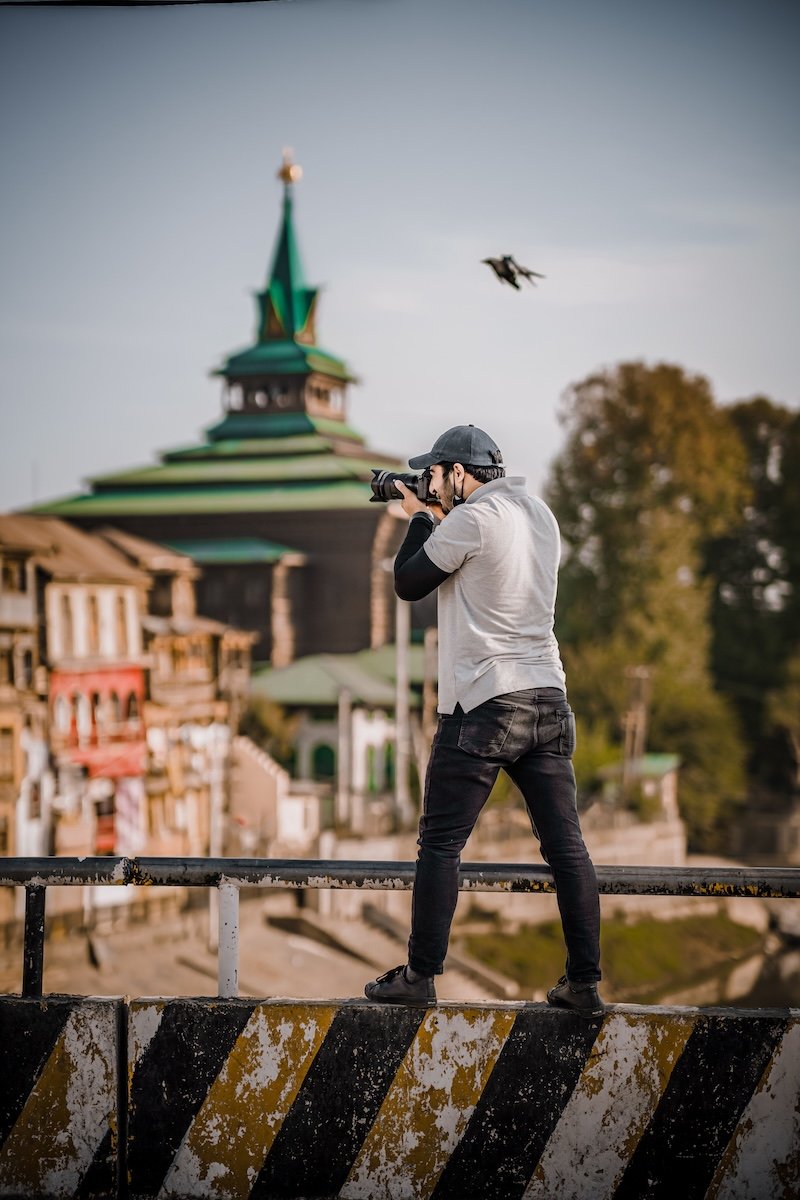
Courtesy of Pexels-Imad Clicks
Most iconic travel photos are iconic precisely because of their light. The golden hour just after sunrise and the warm glow just before sunset transform even ordinary scenes into something extraordinary, and they reward travelers who are willing to set an early alarm or linger after dinner rather than retreating to the hotel. Landmark shots taken at high noon in harsh overhead light rarely capture the feeling of being somewhere remarkable. But those same landmarks photographed in soft, directional morning light can feel genuinely moving. Photographers who have built careers on landscape work understand this instinctively. The influence of Peter Lik landscape photography, with its extraordinary use of natural light and dramatic timing, has shown countless aspiring travel photographers what becomes possible when you commit to being in the right place at the right moment rather than simply the most convenient one.
Look for the Human Story
The most memorable travel photographs almost always contain a human element, even when the setting itself is spectacular. A fisherman mending nets at dawn, children chasing each other through a narrow alley, an elderly woman arranging flowers outside her door: these are the images that stay with people long after the trip has ended. To capture moments like these, you need to engage rather than observe from a distance. Learn a few words in the local language. Smile. Ask permission when appropriate, and respect it graciously when it is declined. People respond warmly to genuine curiosity, and that warmth has a way of showing up in photographs in ways that are impossible to manufacture after the fact.
Embrace Imperfection and Spontaneity
Travel photography does not always go according to plan, and honestly, some of the best shots happen precisely because something went sideways. The famous landmark is obscured by scaffolding, so you turn around and find a street market you never would have noticed otherwise. A sudden rainstorm clears and leaves the cobblestones gleaming in the unexpected sunshine. Your carefully planned portrait session dissolves into laughter, and you capture something far more real than the composed shot you originally envisioned. Holding your plans loosely and staying open to what actually presents itself is one of the most valuable skills a travel photographer can develop. Authenticity rarely arrives on schedule.
Edit with Restraint and Intention
What happens after you put the camera away matters just as much as what happens in the field. Post-processing has become a natural part of digital photography, but there is a real risk of editing so heavily that the final image no longer resembles the place you actually visited. Authentic travel photography benefits from restraint: adjusting exposure, contrast, and color balance to reflect what you genuinely saw, rather than chasing a heavily filtered aesthetic that could have been applied to a photograph taken anywhere. Your editing choices should serve the story the image is already telling, not replace it with a different one entirely.
Conclusion
Capturing authentic moments while traveling is ultimately less about equipment or technical skill than it is about presence, patience, and genuine curiosity about the world. The travelers who come home with the most meaningful photographs are usually the ones who spent the most time actually paying attention. They stayed a little longer, woke up a little earlier, and chose connection over convenience at every turn. Your camera is simply the tool that lets you bring a piece of that attention home with you.