
Why integrated Electronic Flight Bag systems are addressing a fragmented market for general aviation pilots
A simple idea, a surprisingly complicated purchase
For many general aviation pilots, adopting an Electronic Flight Bag (EFB) begins with a seemingly straightforward decision: buy an iPad and install an aviation app. In practice, that decision opens a chain of questions. Which iPad fits the cockpit? Does it need cellular capability? How will it obtain GPS position? Which ADS-B receiver works with the chosen software? Where should the tablet be mounted, and how will it remain powered on a long flight? Each answer affects the others. What looks like a single purchase becomes a small integration project, often spread across electronics retailers, aviation suppliers and accessory manufacturers. The challenge is not a shortage of good products; it is the fragmentation of the buying and setup process.
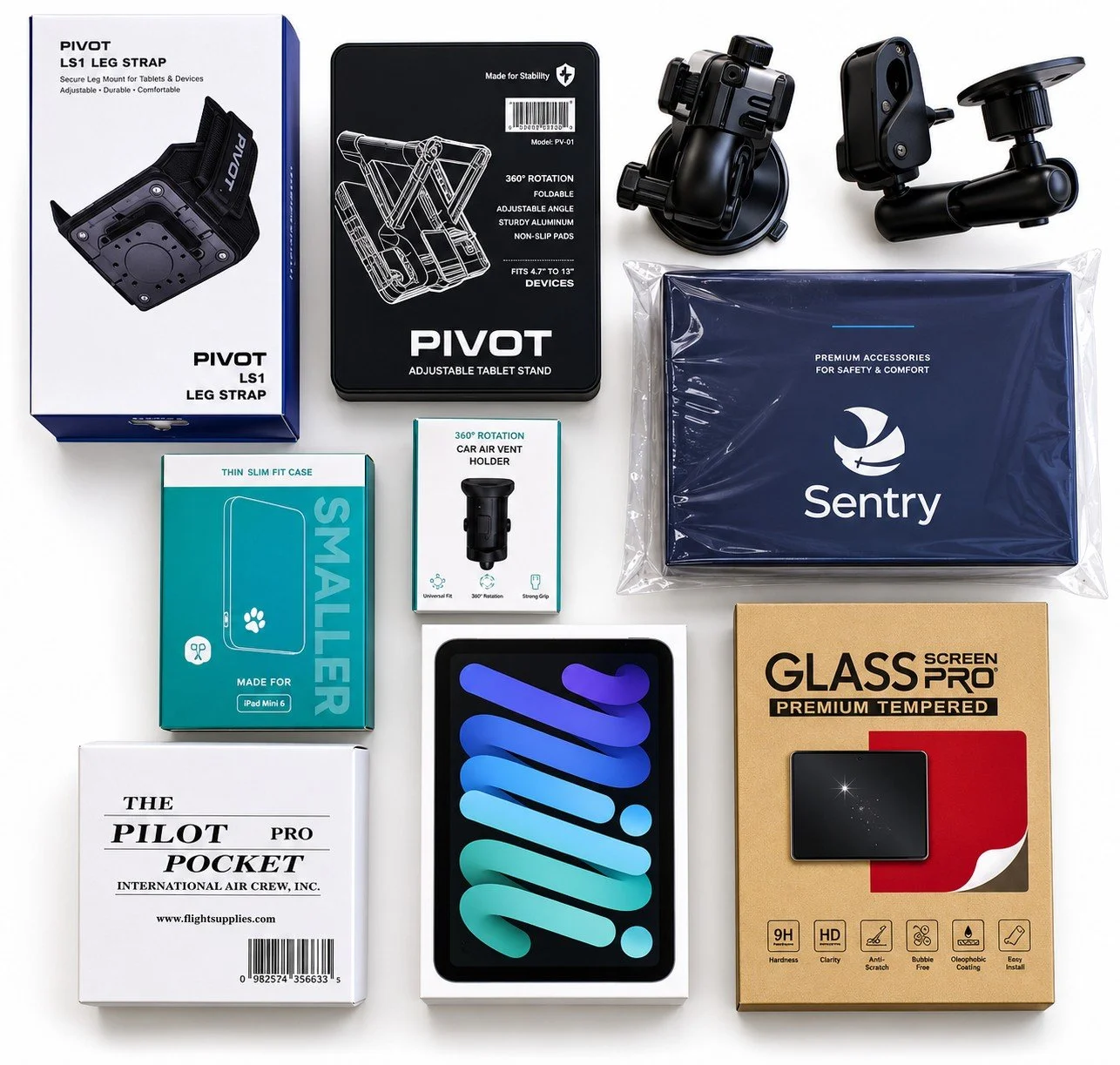
Example of an integrated iPad, mounting, power and aviation-accessory configuration. Image courtesy of Sharks Technologies.
The Wi-Fi versus cellular decision
An iPad mini offers a compact display that can be practical in smaller cockpits, but pilots still need to understand the distinction between Wi-Fi-only and Wi-Fi + Cellular models. A Wi-Fi-only iPad does not have the same built-in satellite positioning capability as the cellular-equipped model. It can nevertheless receive GPS position from a compatible external receiver. The Wi-Fi + Cellular version incorporates GNSS capability that can provide an additional positioning source without requiring a paid cellular data plan. Cellular connectivity itself is not a substitute for downloading charts and flight information before departure. For a student pilot flying with a reliable external GPS receiver, Wi-Fi-only hardware may be entirely suitable. Pilots who value an independent GPS source may prefer the cellular-equipped model. Neither choice eliminates the need for sound preflight preparation or appropriate aircraft navigation equipment.
ADS-B: understanding what the receiver actually adds
The next decision concerns Automatic Dependent Surveillance–Broadcast (ADS-B) reception. Portable receivers can deliver compatible in-flight weather information, traffic data and GPS position to an EFB application. Yet not every receiver offers the same features, and ADS-B traffic displays cannot be assumed to show every aircraft. Weather data may be delayed and must not be treated as a real-time tactical tool for penetrating hazardous conditions. A basic receiver such as Sentry Mini addresses core weather, traffic and GPS needs when used with ForeFlight. The full Sentry adds capabilities such as an attitude reference system and carbon monoxide detection. Those differences matter more than a simple comparison of price: a new VFR pilot may have different priorities from an experienced cross-country or instrument pilot. Portable ADS-B reception supplements, rather than replaces, certified equipment, visual scanning and established operating procedures.
The accessories are part of the system
Even a correctly selected tablet and receiver can be frustrating if the physical installation is poorly considered. A kneeboard may work well in a training aircraft, while a suction or yoke mount can provide a more convenient viewing angle in another cockpit. Mount placement must preserve control movement, instrument visibility and safe egress. Protective cases and antiglare screen films address everyday handling and readability, but sunlight and cockpit heat still require attention. Power planning is equally important. A 10,000 mAh backup battery, an appropriate USB-C charging adapter and compatible cables can provide useful resilience, provided the pilot verifies actual endurance, aircraft power availability and charging behavior. In particular, externally powered accessories and battery-operated receivers have different operating requirements. Good EFB planning therefore considers ergonomics, electrical power, heat and accessibility alongside software compatibility.
An integrated response to fragmented sourcing
One response to this complexity is to select the hardware as a coordinated package rather than as unrelated purchases. Philadelphia-based Sharks Technologies applies that approach through its AeroView line of preselected EFB bundles. The concept is to bring an iPad mini, a ForeFlight-compatible Sentry receiver, mounting equipment, protective accessories and power provisions into one defined configuration. Components are selected for compatibility and assembled as a cockpit-oriented system. The ForeFlight software subscription is separate. This does not mean every aircraft or mission has identical requirements, or that setup checks can be skipped. It means the pilot begins with a documented combination of equipment instead of researching each interface independently. For new pilots especially, reducing the number of separate purchasing decisions can make the transition to digital flight planning easier to understand.
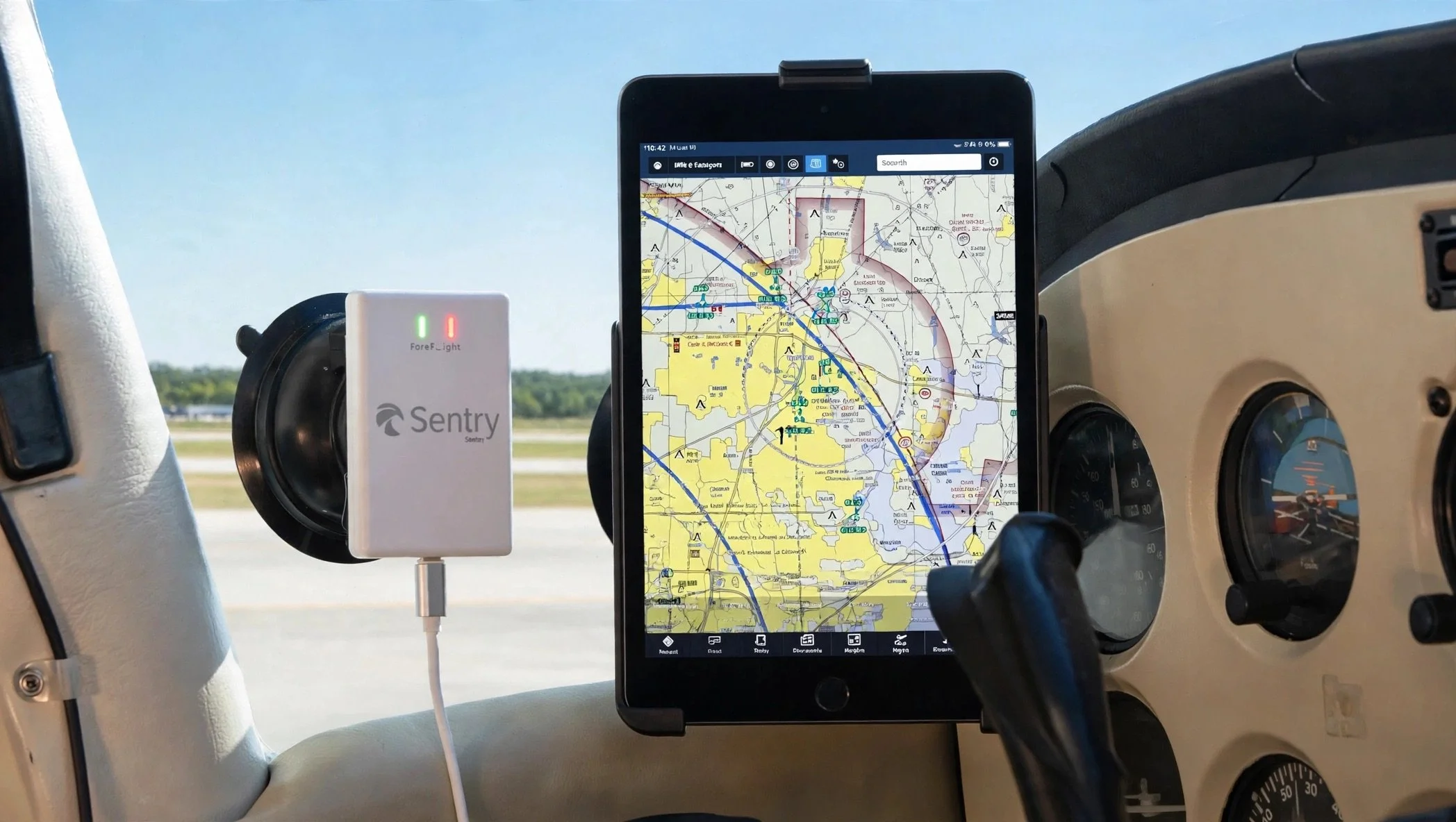
iPad and ADS-B installed in cockpit. Image courtesy of Sharks Technologies.
Three configurations for different flying needs
AeroView Basic pairs a Wi-Fi iPad mini with Sentry Mini, a rotating kneeboard, protection, backup power and an organizer. It is structured around the needs of students and pilots beginning to use an EFB. AeroView Plus uses a Wi-Fi + Cellular iPad mini with built-in GPS capability, retains Sentry Mini and adds multiple mounting choices, including suction and yoke options. AeroView Pro combines the cellular-equipped iPad with the full Sentry receiver and the PIVOT case and mounting ecosystem. The distinctions are practical rather than merely cosmetic: they reflect different preferences for positioning redundancy, receiver functions and cockpit mounting flexibility. The correct configuration still depends on aircraft layout, flight profile, budget and the pilot’s own equipment requirements.
The economics of fewer separate transactions
Bundling can reduce more than the number of items on a shopping list. Individually sourced equipment may involve multiple shipping charges, delivery dates, return policies, compatibility questions and warranty contacts. Time spent identifying suitable parts, comparing specifications and resolving mismatches has a cost, even when it does not appear on a receipt. A consolidated shipment and one point of contact can simplify those logistics. Sharks Technologies describes its model as one shipment, one Sharks warranty and U.S.-based customer support, with a one-year warranty on the bundle. Those arrangements may be particularly useful to pilots who would otherwise coordinate support among several vendors. Actual monetary savings should always be checked against current component prices, shipping and any applicable taxes; a bundle is not automatically the lowest-cost choice for every buyer.
What pilots should still verify
A preselected system is a starting point, not a substitute for cockpit evaluation. Pilots should confirm mounting clearance in the specific aircraft, charging connections, downloaded chart coverage, receiver placement and connectivity before flight. They should also understand the limits of portable weather and traffic products and maintain suitable backups. Flight instructors can help students decide when an EFB is useful without allowing the device to distract from fundamental navigation and aircraft control skills. The goal is not to add more screens to the cockpit, but to make information available in a predictable, manageable way.
A broader shift toward complete cockpit workflows
The wider lesson is that EFB adoption is no longer just about choosing a tablet or downloading an app. It is about integrating hardware, power, positioning, traffic and weather reception, mounting and support into a coherent workflow. AeroView illustrates one commercial response to that problem: packaging a set of compatible aviation electronics around recognizable pilot needs. Whether pilots build their own systems or choose an integrated kit, the most useful question is the same: will the complete setup work reliably, comfortably and understandably in the aircraft where it will actually be used? Simplifying that answer is where integrated EFB solutions can provide their greatest value.